

A child’s curiosity and natural desire to learn are like a tiny flame, easily extinguished unless it’s protected and given fuel. This book will help you as a parent both protect that flame of curiosity and supply it with the fuel necessary to make it burn bright throughout your child’s life. Let’s ignite our children’s natural love of learning!
October 24th, 2007
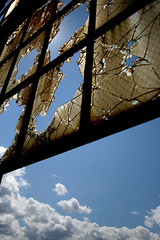
The San Diego Fires and the Broken Window Fallacy
As the LA Times reports, some economists are claiming that the destruction caused in the San Diego fires will be beneficial to the economy:
In fact, some observers see a boon to areas such as construction, which is down 28,600 jobs through September, a 3% decline from the previous year, according to the state Employment Development Department.
“In the odd nature of economic accounting, this will probably be a stimulus,” said Alan Gin, a University of San Diego economist. “There will be a huge amount of rebuilding in the next couple of years, financed by insurance payments.”
Such economists have obviously not studied the parable of the broken window by Frederic Bastiat, which clarifies that such events always have hidden (“unseen”) costs involved.
Yes, people will have to spend money on rebuilding, remodeling, and the rest. Yes, those involved in these trades will stand to gain. But what would happen with this money had it not been used in this instance? Proponents of the broken window theory suggest that destruction is good, because it stimulates the economy through reconstruction afterwards. Would the United States’ economy be better off if the fires swept the entire land clean, and we started over completely? How does destruction truly benefit anybody?
One might argue that the money already exists in the form of insurance checks, and therefore can easily be spent in this case to stimulate the economy. But as William Anderson notes, this too is a fallacy:
It is true that some people will be made better off temporarily as insurance money compensates the owners in part for their losses and new construction begins. Even then, however, anyone who has ever had to make an insurance claim on lost or destroyed property knows that the ordeal is hardly costless.
This analysis takes into account only a tiny number of [people] who will be employed either cleaning up the rubble or rebuilding after this gruesome task has been completed. Kudlow fails to recognize that the billions of dollars that insurance companies will pay for losses will come from funds that would have been invested elsewhere. Other projects that were being planned will now die, as they will be starved for lack of available capital.
The author of this article also explains why there’s no big pot of money sitting around waiting to be used in instances such as the San Diego fires:
Boil this down into simpler terms. You wreck your car, and in the process, you hurt your back. Your car insurer writes you a check. You get the car fixed. Your health insurer cuts you a check. You go to the hospital, and get your back fixed. Is the economy better off for your accident? If you subscribe to broken-window thinking, you say yes. You’re back in good health. Your car is fixed. You’re no worse off than you were before, and your mechanic and your chiropractor are doing better.
That’s baloney, of course. The money from your insurer came from somewhere else. It was pulled from the task of creating new wealth, and spent on merely getting you back to where you were before you had an accident. In fact, often that money comes from you, when you consider that every time an insurance company writes a check, premiums go up just a hair for all of its policyholders.
Nobody is better off after a disaster. The economy, while stimulated in limited, related areas, is not better off as a whole. Projects that would have been pursued are left ignored for lack of liquidity, and portions of the economy that would have otherwise been benefited are left bereft.
9 Responses to “The San Diego Fires and the Broken Window Fallacy”
Leave a Reply
You must be logged in to post a comment.




I know this is a different direction than the intended discussion of economics but two thoughts-
“Nobody is better off after a disaster”
Disaster and war have been very good to the LDS Church: from good press in New Orleans, to thousands upon thousands of converts in the Philippines starting with U.S. servicemen in WWII.
Another separate thought is the specific construction company that gets rich off the new contracts is better off. This can be carried over into the Iraq war and all the companies that have become extremely rich from their government contracts, and hence their financial conflict of interest for the war to end.
Disaster and war have been very good to the LDS Church: from good press in New Orleans, to thousands upon thousands of converts in the Philippines starting with U.S. servicemen in WWII.
While I was relating my statement strictly to economics, I do see your point when applied to other realms of life.
I suppose that my reason for saying that statement is that bad does not justify good. Do good things come as a result of bad ones? Sure – in the broken window theory, the glazier gets a job. That’s good, right? Sure, but that doesn’t justify the bad thing that caused the good thing.
Another separate thought is the specific construction company that gets rich off the new contracts is better off.
As I stated in the post, there are indeed immediate, related interests (in the case of the theory, the glazier.. in the case of the fires, the construction companies) that do indeed profit. But the fallacy of the argument is when somebody (in this case, the cited economist) states that such an event is beneficial to the economy. That is false.
I very much appreciate Bastiat’s broken window theory. dstoker has pointed out that some people or small groups are better off. But are they really? Does this, then, mean that we should go around hoping (and helping) events like the San Diego fire to occur? I certainly hope not. (I’m just hoping to further the discussion; I’m not suggesting that dstoker was implying this.)
All these small groups are doing is profiting from someone else’s demise. The net result is that we’ve essentially wasted economic resources to get back to where we started.
I sure hope none of the economists cited by the LA Times ever run for public office. But then again, some of them are already in office.
All these small groups are doing is profiting from someone else’s demise.
Same thing with the war profiteers and military industrial complex…
By the way…
It was either Bastiat or Henry Hazlitt who discussed the things we see versus the things we can’t see. The LA Times economists are very poor at their craft, because they have only taken into account what can be seen, and they don’t seem to give a crap about the families whose lives have been destroyed and what (and how long) it will take to get back to where they once were.
Does this, then, mean that we should go around hoping (and helping) events like the San Diego fire to occur? I certainly hope not. (I’m just hoping to further the discussion; I’m not suggesting that dstoker was implying this.)
Obviously not, but it does open the door for conspiracy theorists and understanding that some will choose their own self-interest at the expense of others. In direct relation to a fire, I seem to recall a forest fire in Utah or Arizona a couple years ago that was started by a firefighter desperate for work. In more general terms, consider the US motives for going into Iraq or look at congressional voting and campaign contributions at maplight.org.
I’m getting off topic.
Another comment on the original article- just the fact that some economists or businessmen are licking their chops at the opportunity to profit, or can dismiss suffering and loss in the name of economic development is, to me, a sign of a unhealthy society. Economic vitality is ultimately not the most important element of an ideal society.
So many abandoned mining towns have a history that involves being burnt down three times and rebuilt twice.
Events like this do not create more wealth, but permit the wealth to shift. In no way can this destruction be considered benifical to society- just beneficial to those who make profit from other’s misfortune.
The broken window fallacy is #1 on this list of 10 recurring economic fallacies for the past 230 years.